Deterministic simulation assets
from raw geometry.
Compile 3D meshes & CAD into physics-grounded simulation assets with solver-stable collision and engine-matched QA.
Structure-aware mass, inertia, and friction.
Solver-stable collision geometry.
Validation matched to the simulator you deploy.
Upload geometry or compose a scene. EnviScale compiles the physics, collision, and engine-matched QA into simulation-ready assets.
coffee_cup.step
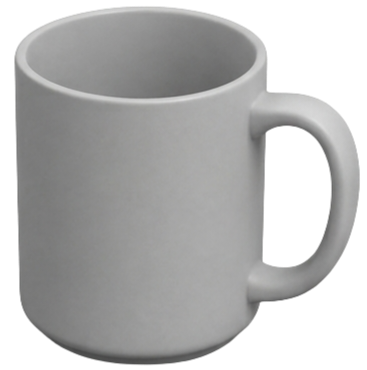
- —STEP detected
- —Units resolved
- —2.4 MB
rigid_body.json
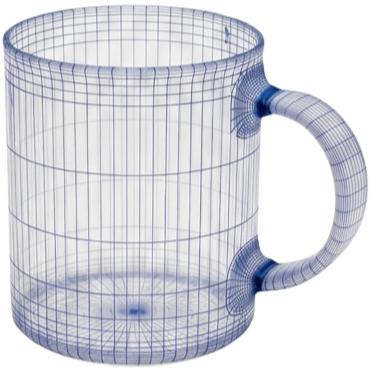
- —Center of mass
- —Inertia tensor
- —Friction & restitution
convex_hulls.obj
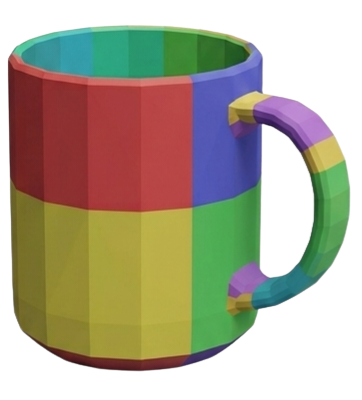
- —Convex parts
- —Solver-safe hulls
- —Visual mesh kept
validation_report.json
QA VERIFIED- —MuJoCo stable
- —Isaac schema
- —Contacts resolved
One compile. Engine-matched. Deterministic.
Compose scenes. Compile physics.
Ship simulation-ready assets.
Add multiple objects, position them in a physical workspace, and compile the complete scene with per-object physics, collision, and validation.
3D Scene Builder & Physics Rollouts
Compose multiple CAD assemblies and meshes into structured simulation environments with verified friction, inertia, and zero-interpenetration collision geometry.
From geometry to simulator-ready.
Ingest raw geometry or CAD, infer geometry-bounded physics, reconstruct hollow volumes, and export simulator-verified asset bundles.
Ingest & Normalize Geometry
Universal ingestion pipeline normalizes polygon meshes, CAD BREP solids, and USD schemas into canonical Z-up coordinates with automated unit plausibility scoring.
Part-level physics and articulation joints.
Preserves native subparts, calculates per-part mass and inertia, and configures kinematic joints with passive or servo actuation.
Passive mode. No actuators emitted. Joint responds purely to external grasping and physical contact forces.
Cavity volume determines physical center of mass
Hollow containers get real cavity volume. Fill state shifts mass and CoM, not a solid bbox guess.
EnviScale reconstructs the hollow interior of containers, so fill state shifts the center of mass and contact response the way it does in the real world, not a bounding-box guess that treats every object as a solid block.
- —Lightweight rigid body
- —Gentle rim-to-base rocking
- —Settles within 1.2 s
Raw geometry in.
A robot picks it up.
The meshes, collision geometry, physics outputs, and validation artifacts shown throughout this page come directly from the EnviScale compiler using the same production pipeline.
Validated in the simulator you ship.
Headless MuJoCo contact rollouts verify dynamic resting equilibrium, inertia conditioning, and no-nan stability. Isaac Sim and Omniverse validate against native UsdPhysics schemas.
Headless 1g gravity settle: dynamic rest equilibrium (v < 0.08 m/s, ω < 0.5 rad/s), finite state, and < 5 mm rest penetration.
PhysicsScene, RigidBodyAPI, MassAPI, colliders, and mesh references verified against USD schema.
PhysX schema compliance, material bindings, and sublayer composition on the exported bundle.
Deterministic engine-matched verification report.
Gate CI on the exact simulator you deploy: verified resting equilibrium, conditioned inertia tensors (cond(I) ≤ 1e4), and schema compliance.
{
  "version": "2.0",
  "status": "verified",
  "tier": "0",
  "mujoco": {
    "settle_stable": "converged · 1.42s",
    "rest_linear_vel_m_s": "0.003 (< 0.08)",
    "max_penetration_m": "0.0004 (< 0.005)",
    "no_nan": true
  },
  "usd_physics": {
    "isaac_sim": { "status": "verified" },
    "omniverse": { "status": "verified" }
  }
}
One compile. Every simulator.
Exports verified MJCF, URDF, and USD Physics bundles with shared mass, inertia, and collision geometry.
Native model with verified inertial frame, separated collision groups, and contact parameters.
Full 6-DOF inertia tensor and relative mesh paths for ROS 1, ROS 2, and Drake workspaces.
Sublayered USD bundle with UsdPhysics and PhysX schemas verified inline.
Built for robotics simulation teams
RL labs, Physical-AI teams, and simulation engineers.
Stop losing episodes to bad assets
Solver-safe CoACD collision and MuJoCo-checked physics before your training loop.
settle_stable · no_nan · penetration < 5 mm · cond(I) <= 1e4One compile, every simulator
MJCF · URDF · USD from one IR, shared inertia, per-engine QA.
MJCF · URDF · USD Physics · shared inertial frameScale geometry to sim-ready
Batch-compile via REST with auto units, provenance, and validation.
REST · auto units · X-Resolution-Source · validation_report.jsonBenchmarks you can re-run
Pinned compiler and fixed seed reproduce identical collision and inertia.
seed 42 · pinned compiler · geometry-hash cacheAutomate asset ingestion and evaluation
Compile single CAD assemblies into simulation assets or package multi-object benchmark testbeds directly via REST.
Two dedicated endpoints for your robotics pipeline: Asset Compilation for turning raw geometry into certified, solver-safe simulation assets, and Benchmark Packaging for assembling deterministic multi-object evaluation scenes.
pip install enviscale# 1. Install official EnviScale CLI & Python SDKpip install enviscale # 2. Compile raw asset or CAD assembly directly into verified simulation bundleenviscale compile gearbox_housing.step \ --format mjcf \ --quality balanced \ --output ./simready_gearbox/For evaluation and research.
- —Playground
- —25 asset compilations / month
- —Validation reports
- —MJCF · URDF · USD Physics exports
- —Community support
- —No API access
- —Playground
- —25 asset compilations / month
- —Validation reports
- + 3 more capabilities
For robotics teams integrating EnviScale into production workflows.
- —REST API
- —Batch compilation
- —Team workspaces
- —Multi-simulator exports
- —CI/CD integration
- —Priority support
- —REST API
- —Batch compilation
- —Team workspaces
- + 3 more capabilities
Includes 500 asset compilations/month. Additional usage is billed based on your production workload.
For high-volume robotics organizations.
- —Dedicated infrastructure
- —On-prem deployment
- —SSO
- —SLA
- —Custom validation
- —Dedicated support
- —Custom usage agreements
- —Dedicated infrastructure
- —On-prem deployment
- —SSO
- + 4 more capabilities
Upload in the dashboard or call the REST API.
Upload a mesh or CAD file in the dashboard, or call the API from your training pipeline.